How links work: As an Amazon Associate I earn from qualifying purchases, at no extra cost to you.
Prices, availability, shipping, coupons, and seller details can change. Always confirm the current product listing and return policy before buying.
Five ports usually means four downstream devices
The router or upstream switch normally consumes one port. Count the NAS, desktop, mesh node, access point, dock, TV, console, and one spare before comparing prices.
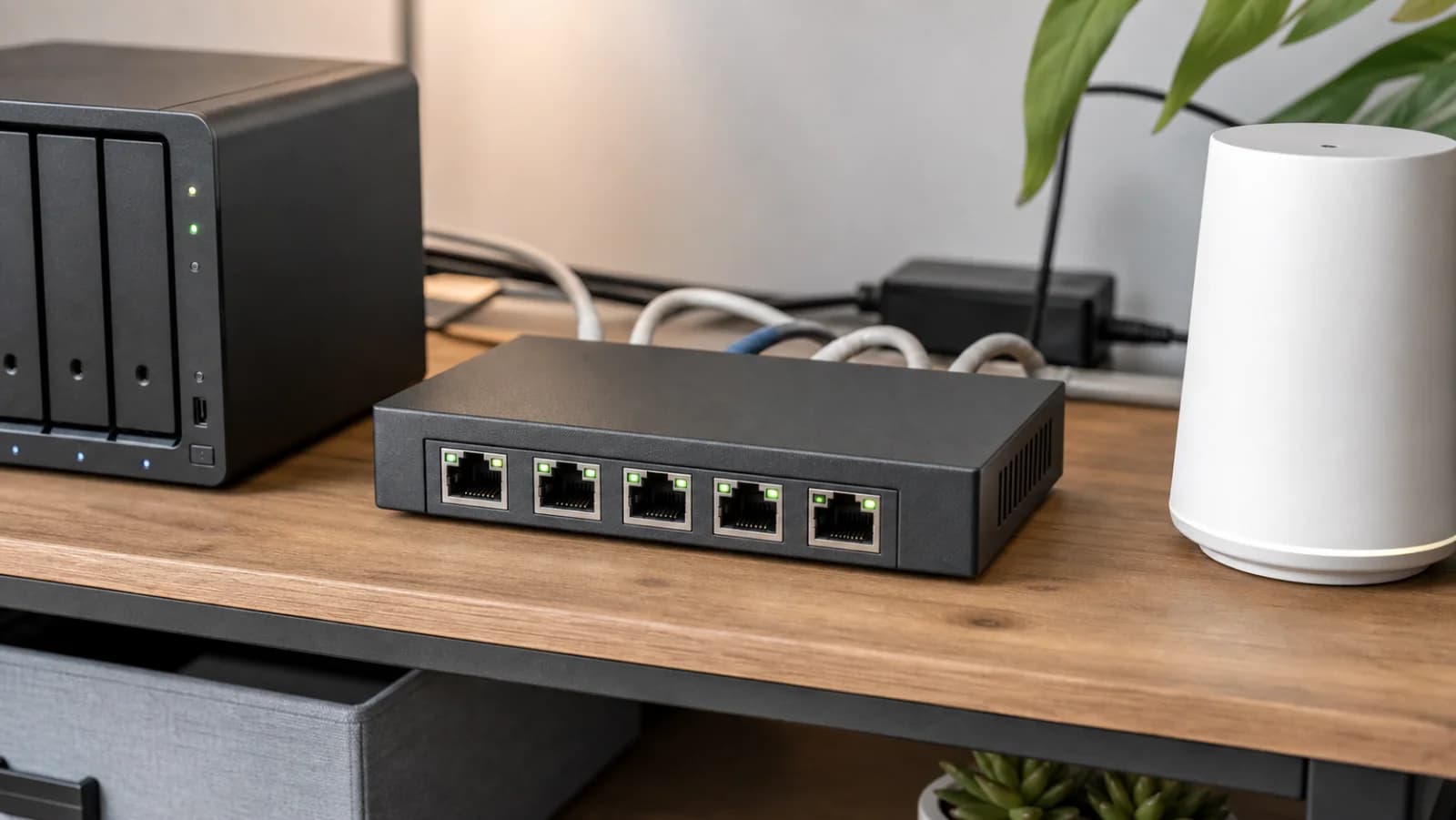
TP-Link
TP-Link TL-SG105-M2 5-Port 2.5G Unmanaged Switch
A version-aware guide to the fanless TL-SG105-M2, covering its five 100M/1G/2.5G ports, 25Gbps switching capacity, 12.11W listed maximum draw, port budget, and unmanaged limits.
Best for: Five-port 2.5GbE expansion with detailed official documentation
Main caution: No VLAN configuration, port monitoring, link aggregation, or PoE
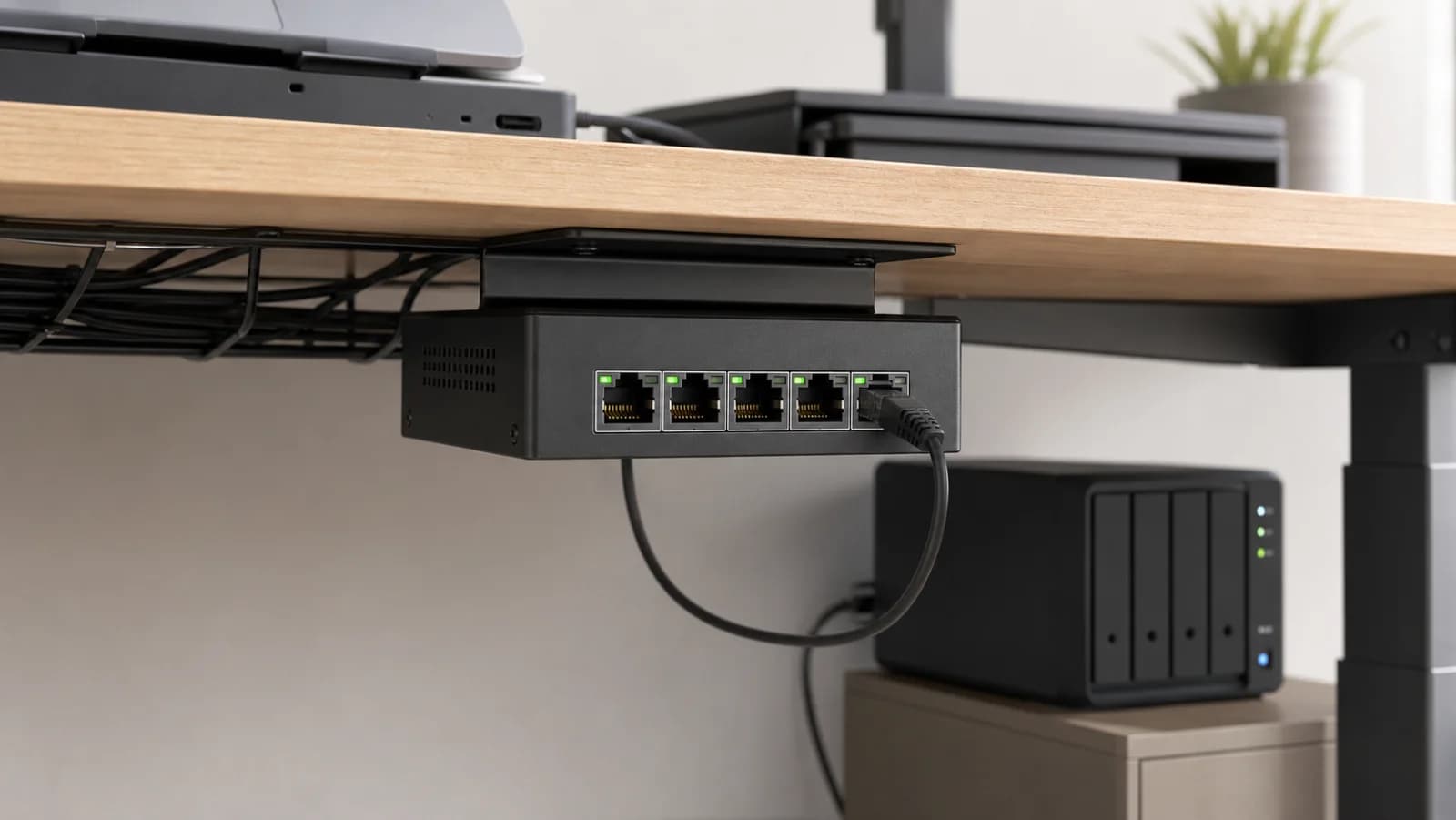
NETGEAR
NETGEAR MS305 5-Port 2.5G Unmanaged Switch
A compact-switch guide to MS305, with five 100M/1G/2.5G ports, fanless metal construction, 9.24W listed maximum draw, 9,720-byte jumbo frames, mounting kit, and warranty-region checks.
Best for: Compact under-desk or wall-mounted five-port 2.5GbE expansion
Main caution: No VLAN, link aggregation, per-port statistics, or PoE controls
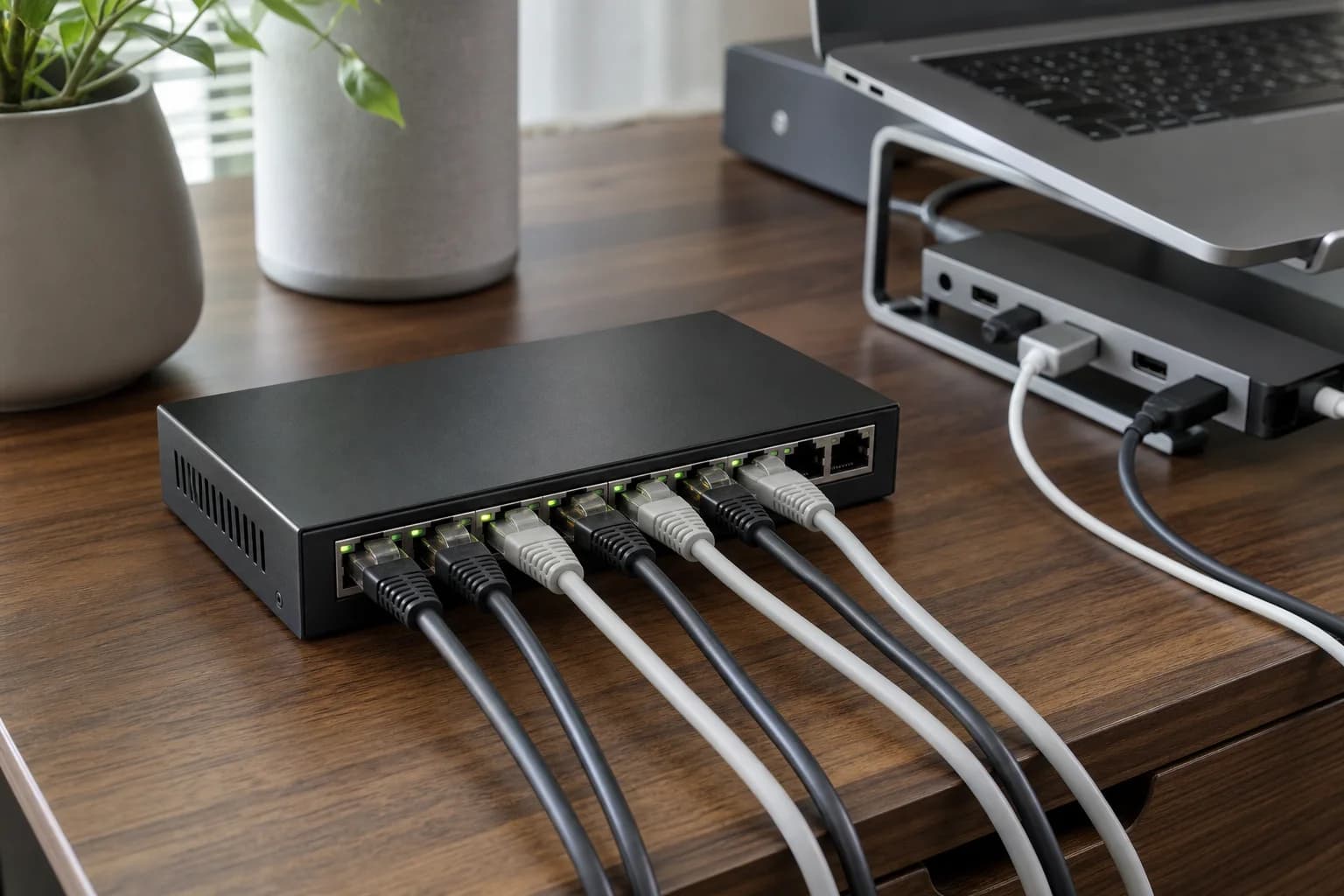
TRENDnet
TRENDnet TEG-S380 8-Port 2.5G Switch
A version-aware guide to TRENDnet's unmanaged eight-port 2.5GbE switch, including fanless operation, Cat5e-or-better cabling, its 40Gbps official switching specification, and the hardware-version check the Amazon title does not make obvious.
Best for: Quiet eight-port 2.5GbE expansion for a multi-gig home network
Main caution: No managed VLAN, link-aggregation, or monitoring controls